
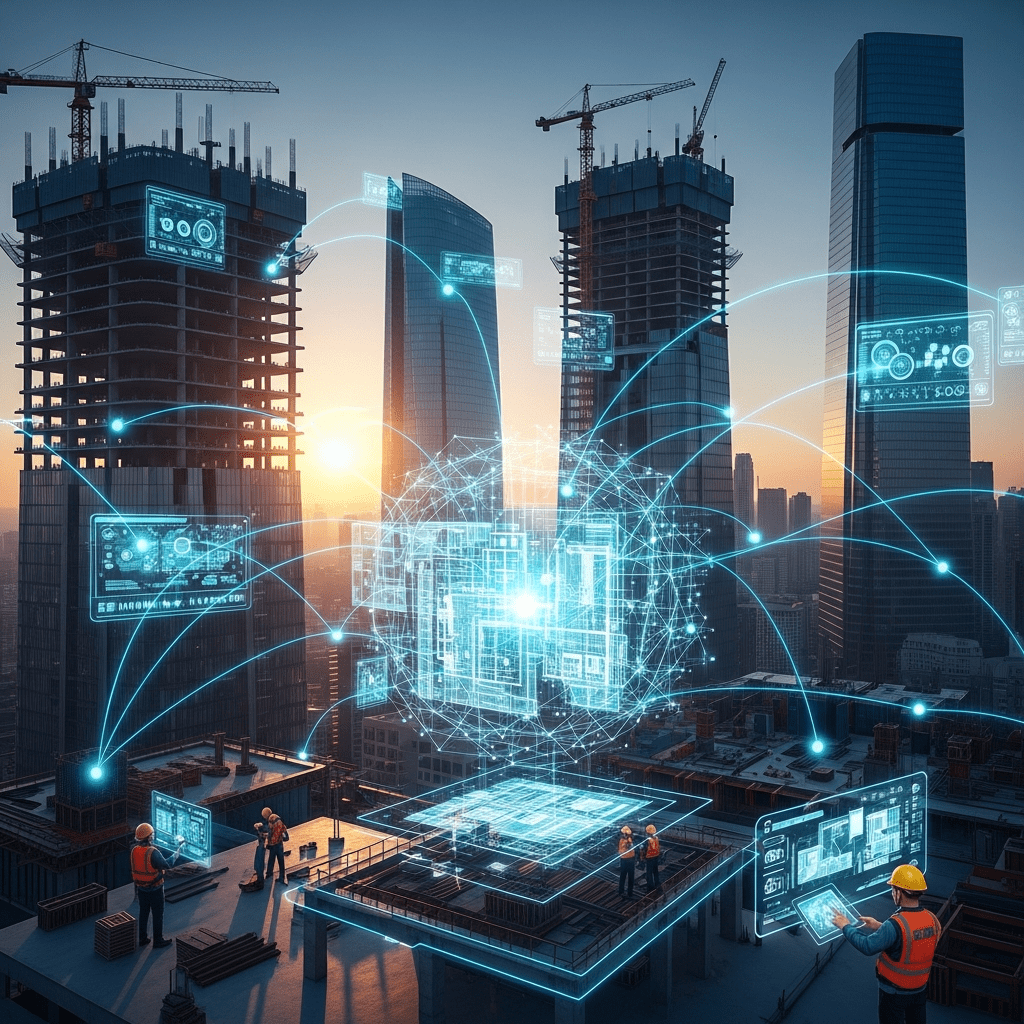
Shaping the Future: The Importance of AI in Construction Planning and Urban Development
The construction and urban development industries are currently undergoing a radical transformation. For decades, these sectors relied on traditional methodologies, manual calculations, and experience-based decision-making. However, the integration of Artificial Intelligence (AI) is shifting the paradigm. By leveraging data-driven insights and predictive modeling, AI is proving that the importance of AI on construction planning and urban development extends far beyond simple automation—it is becoming the backbone of smarter, more efficient, and more sustainable cities.
Revolutionizing Construction Planning

Construction projects are notoriously complex, often plagued by budget overruns, scheduling delays, and safety concerns. AI is addressing these chronic issues by optimizing the planning phase long before a single shovel hits the dirt.
Predictive Scheduling and Resource Allocation
AI algorithms can analyze historical project data to predict potential bottlenecks. By simulating thousands of different project scenarios, AI identifies the most efficient path forward. This allows project managers to allocate labor, materials, and machinery with precision, minimizing waste and ensuring that timelines remain realistic.
Enhanced Safety Protocols
Safety is a top priority on any job site. AI-driven platforms can analyze camera feeds in real-time to detect if workers are wearing appropriate personal protective equipment (PPE) or if they are entering restricted, hazardous zones. By identifying risks before they lead to accidents, AI transforms safety from a reactive practice into a proactive strategy.
Designing Smarter Urban Landscapes
Urban development is no longer just about building structures; it is about creating interconnected ecosystems. As our global population shifts toward urban centers, the demand for intelligent city planning has never been higher. AI is the critical tool enabling architects and urban planners to rise to this challenge.
Optimized Land Use and Zoning
AI models process vast datasets related to climate patterns, traffic flow, infrastructure capacity, and population density. This allows city planners to design neighborhoods that maximize land use while maintaining high quality-of-life standards. By modeling the impact of a new development on existing sewage, power grids, and transportation networks, planners can ensure that growth is sustainable and does not overwhelm current resources.
Digital Twins and Simulation
One of the most significant advancements in urban development is the concept of a “Digital Twin.” This is a virtual replica of a physical city or project site powered by real-time data from IoT (Internet of Things) sensors. Planners can test the impact of new policies—such as a change in traffic light patterns or the addition of a new park—within the digital model to predict the outcome before implementing the change in the real world. This capability significantly reduces the risk of costly urban planning errors.
The Push for Sustainability
Perhaps the most crucial aspect of the importance of AI in construction planning and urban development is its role in sustainability. The construction industry is responsible for a significant portion of global carbon emissions. AI helps mitigate this impact by:
- Material Optimization: AI software can calculate the exact amounts of concrete or steel required, reducing excess waste on site.
- Energy Efficiency: During the design phase, AI predicts how a building will interact with sunlight, wind, and ambient temperature, allowing architects to orient structures in ways that minimize the need for artificial heating and cooling.
- Smart Infrastructure: Once built, AI continues to manage building energy consumption, adjusting lighting and HVAC systems based on real-time occupancy.
Overcoming Challenges to Adoption
Despite the clear benefits, the integration of AI is not without hurdles. The construction industry has traditionally been slow to adopt new technologies due to high implementation costs, a shortage of technical expertise, and a culture of risk aversion.
To fully realize the potential of these tools, organizations must invest in training their workforces and fostering a culture of data literacy. The transition to AI-centric planning requires a bridge between traditional construction knowledge and modern data science.
The Road Ahead
We are witnessing the dawn of a new era. As AI continues to evolve, its capacity to solve complex logistical problems and design more livable spaces will only grow. By embracing these technologies, stakeholders in construction and urban development can reduce waste, improve safety, and build environments that are resilient enough to handle the challenges of the 21st century.
The importance of AI on construction planning and urban development is clear: it is the difference between building for the present and designing for a sustainable future. The firms and cities that lead in this AI-driven transition will set the standard for the urban landscapes of tomorrow.




Leave a Reply