
May 31, 2026
AI Music Generation: 5 Key Challenges and Trends
The rapid evolution of artificial intelligence has touched every creative industry, but perhaps none as viscerally as music. With the emergence of sophisticated generative models capable of composing symphonies, mimicking vocal timbres, and producing radio-ready beats in seconds, the music world finds itself at a crossroads. While some view these tools as the next frontier of human expression, many creators see an existential threat. Understanding the challenges of AI music generation requires looking beyond the technology to the human impact it leaves in its wake. For more context on how these shifts mirror broader changes in the tech sector, see our guide on how AI is transforming the cyber security technology landscape.
The Ethical and Legal Dilemma
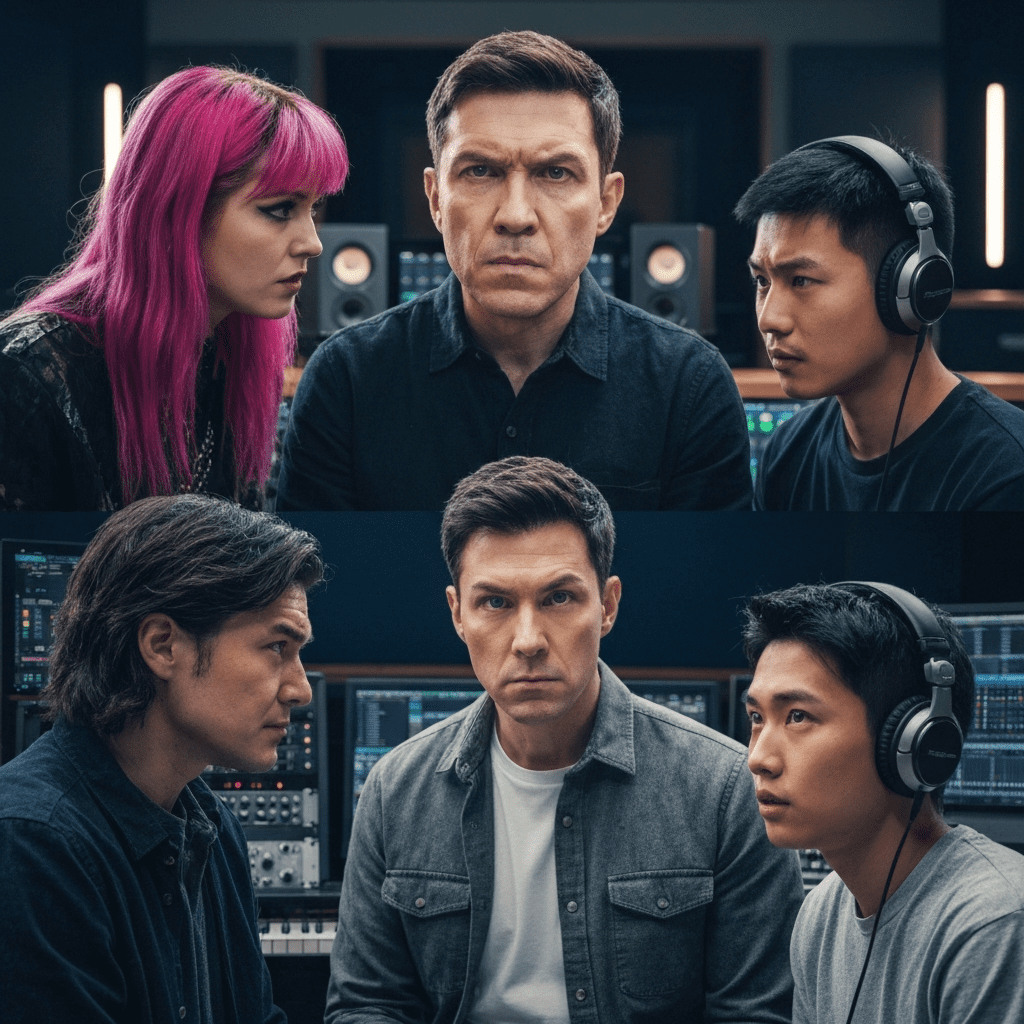
The primary tension surrounding this technology stems from the “training data” problem. Most generative AI models are trained on massive datasets consisting of millions of copyrighted songs. When an AI produces a track that mimics the specific stylistic nuances of a world-famous artist, it does so by analyzing—and essentially synthesizing—the work of human creators who never consented to their music being used for this purpose. According to the World Intellectual Property Organization, navigating these copyright complexities is essential for the future of digital creativity.
This has sparked a fierce debate over intellectual property. If a machine learns from a songwriter’s life work, is it “learning” like a student, or is it “plagiarizing” like a thief? Legal frameworks are currently struggling to keep pace, leading to high-profile lawsuits and demands for transparency. Artists are fighting for the right to opt-out of training datasets, fearing that their unique “sonic thumbprint” could be mass-produced by anonymous users without compensation or credit.
Artist Reactions: Fear vs. Fascination
The music community is deeply divided on the utility and morality of AI.
The Resistance
Many established musicians and vocalists view AI as a form of cultural theft. Vocal deepfakes, which allow users to place a celebrity’s voice on any track, have been a particular point of contention. We have already seen viral instances of “ghost tracks” where AI successfully mimicked the voices of prominent stars, causing confusion among fans and threatening the authenticity of an artist’s brand. For these creators, AI represents a devaluation of human labor and emotional experience.
The Experimentalists
Conversely, some artists see AI as an advanced synthesizer—another tool in the digital shed. Producers are using AI to generate backing tracks, explore complex chord progressions, or provide a creative spark when they hit a wall. For these creators, AI is a collaborative partner rather than a replacement. They argue that as long as the artist maintains final creative control and human intention, the technology is simply an evolution of studio production.
Major Challenges Facing the Industry
Beyond the ethical debate, several technical and practical hurdles remain:
- Copyright Ambiguity: Current copyright law largely protects human-authored works. Content generated entirely by AI often falls into a legal gray area, making it difficult for creators to own or monetize their machine-assisted compositions.
- Market Saturation: With the barrier to entry lowered, streaming platforms are being flooded with thousands of AI-generated tracks daily. This creates a “noise” problem, making it increasingly difficult for independent human artists to get noticed.
- The Loss of Human Connection: Music is fundamentally a mode of human communication. There is a palpable concern that an industry dominated by AI will lead to a homogenization of sound, where songs are optimized for algorithmic favor rather than deep emotional resonance.
Future Trends: Where Do We Go From Here?
As we look toward the future, the integration of AI in music will likely shift toward regulation and hybrid models. We can expect to see several key trends emerge in the coming years:
- AI-Artist Collaboration Licensing: We are likely to see new models where artists officially license their “voice models” for a fee. Instead of fighting the technology, musicians might “rent out” their vocal characteristics to fans and producers in a controlled, legal environment.
- Detection and Verification Technology: Just as we have tools to detect AI-written text, we will see a surge in “digital watermarking” for audio. This will help listeners and platforms identify which songs are human-made and which are AI-generated, preserving the value of human performance.
- Human-Centric Premium: As AI-generated background music becomes a commodity, the value of “human-made” music may actually rise. Live performance, storytelling, and the public’s desire for real-life human connection will likely become the ultimate competitive advantage for musicians.
Ultimately, the future of AI in music is not about machine versus human. It is about establishing boundaries that protect the livelihood of the creator while allowing for the responsible growth of technology. The challenge lies in ensuring that while we embrace the efficiency of the machine, we do not lose the soul of the song.